- Products
- Service
- Expertise
- fischer group
- References
- Home
- References
- Elevator test tower by thyssenkrupp in Rottweil

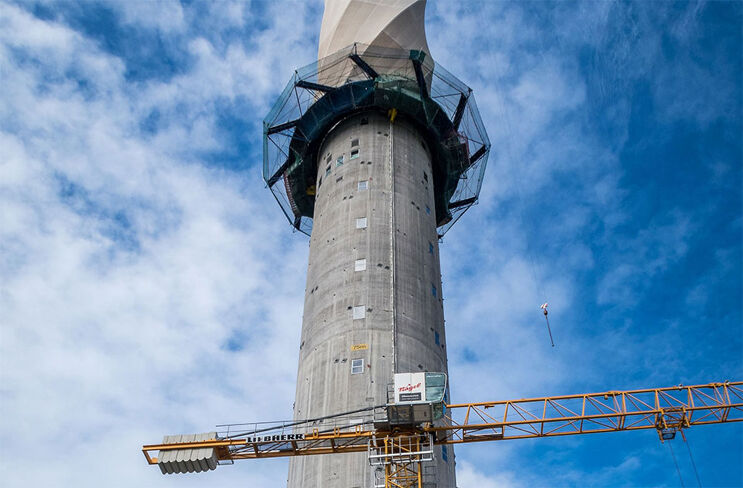
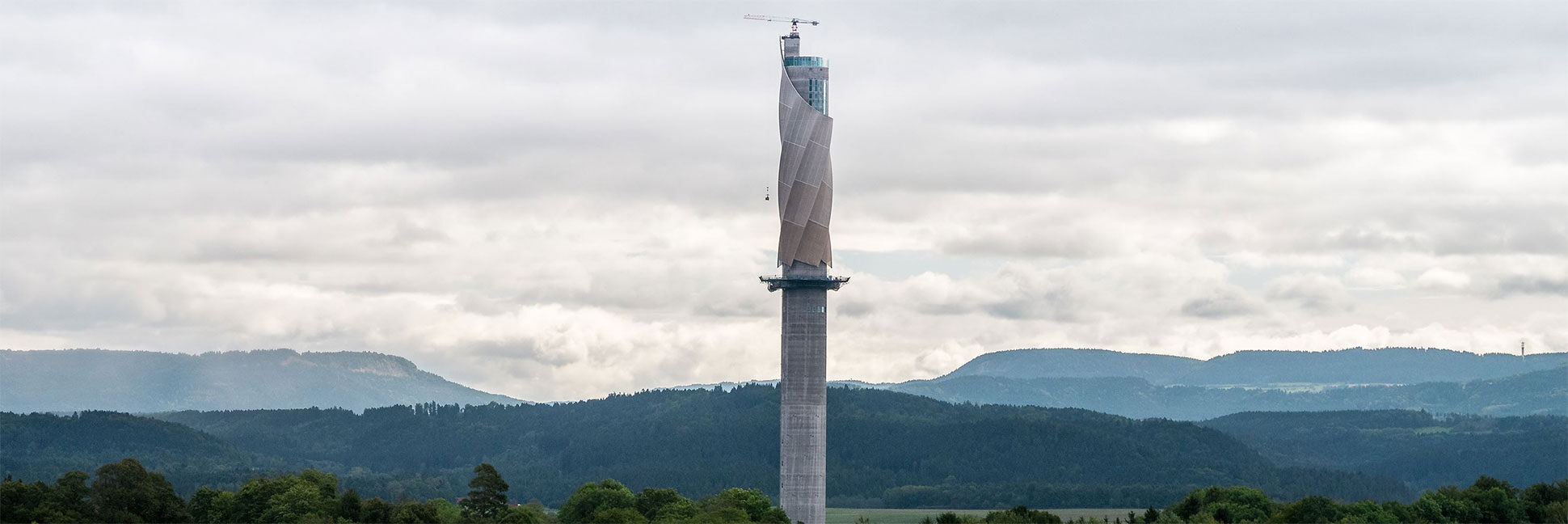
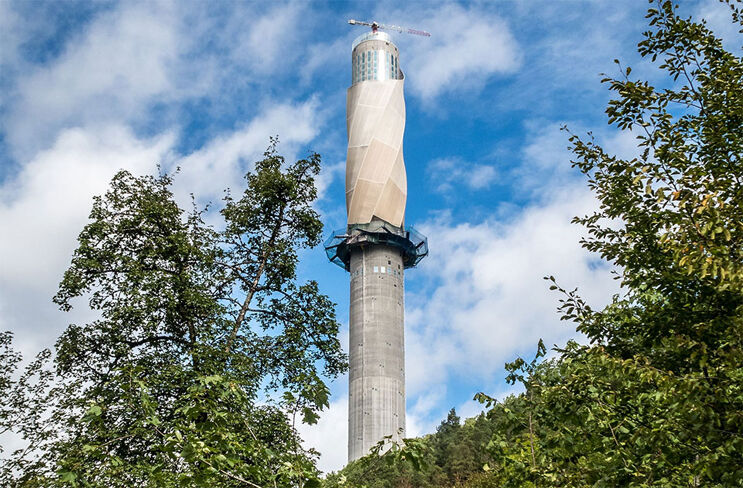
A literally new highlight in Baden-Württemberg is the thyssenkrupp test tower, designed by the renowned architects Professor Werner Sobek and Helmut Jahn. From the 232 m high visitor platform, it offers a 360-degree panoramic view from Rottweil to the Swabian Alb – on clear days even as far as the Swiss Alps. At 246 m high, it towers above all buildings in Baden-Württemberg.
The tower weighs 40,000 t – as much as 8,000 fully grown African elephants. Clad in a twisted, increasingly transparent glass fiber fabric shell towards the top, the colossus still has a light and delicate appearance. Depending on the time of day and year, the membrane changes the external appearance of the tower and the light incidence in the interior spaces. It is self-cleaning and protects against wind, intense sunlight, and cooling down.
In addition to the products, we were particularly impressed by the professional technical advice and support before and during the planning phase
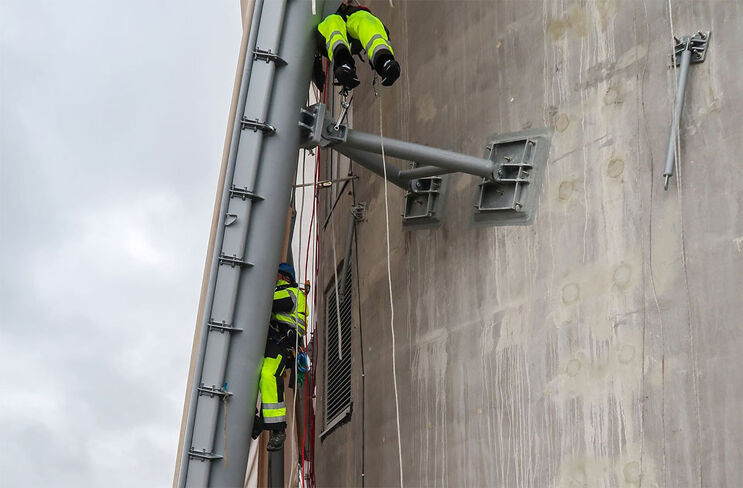
Depending on the on-site conditions and structural calculations, the fischer systems used vary in different tower sections. To a large extent, fischer developed and supplied customized special solutions tailored to the project. Zones 1 (0–63 m) and 2 (63–110 m) have a wall thickness of 40 cm. At a height of 110 m, the tower has an offset. There, the wall thickness in sections 3 (110–207 m) and 4 (207–243 m) reduces to 25 cm. The concrete strength classes are C50/60 in Zone 1 and C40/50 in the rest of the tower. Challenging difficulties arose from the fact that the anchoring substrate does not everywhere comply with the current fastening technology standards due to construction conditions.
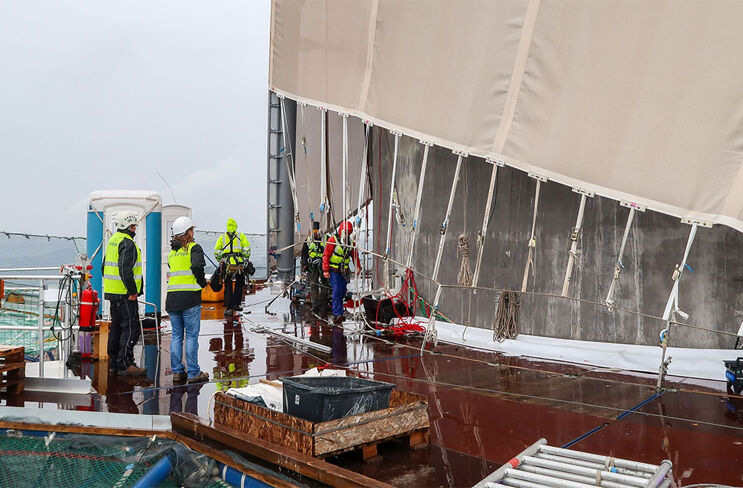
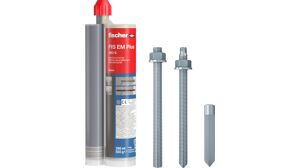
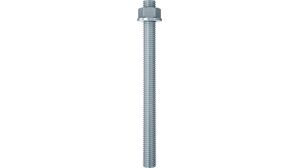
In the range of 27–63 m and in the subsequent Zone 2, the fischer composite anchor system Powerbond with diameter M16 in A4 was used. The system components used were anchor rods (FIS A M16x250 A4) with anchoring depths mostly of 180 mm as well as FIS PS Power-Sleeve sleeves. These were embedded with the Highbond special mortar FIS HB 345 S. Numerous advantages, such as the short curing times and the very high tensile load capacity with relatively low anchoring depth, spoke in favor of this solution.